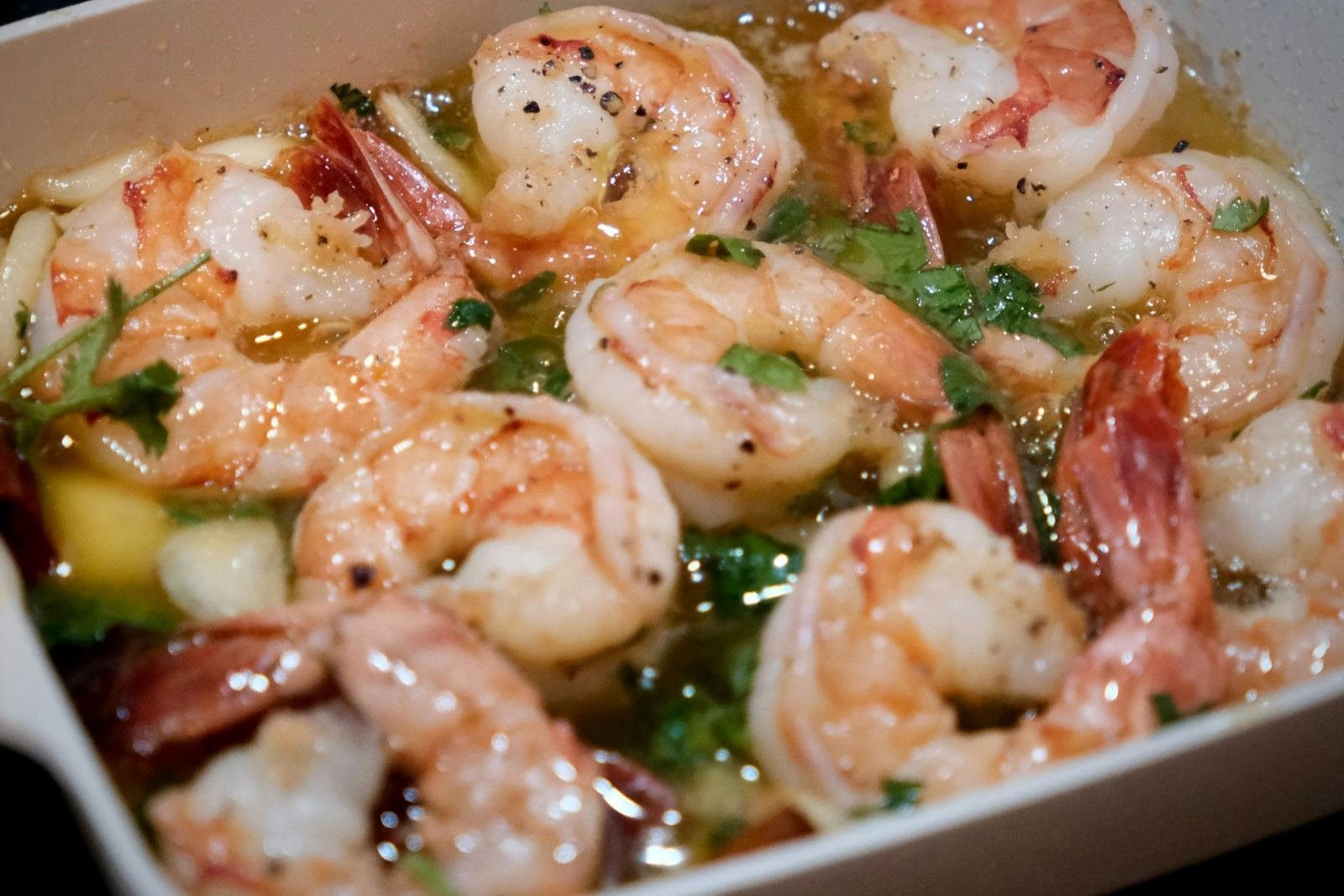
Some recipes are popular because they are impressive, and others because they are simple enough to make on any night of the week. Garlic butter shrimp is both. In less time than it takes to order takeout, you can have a skillet of plump, sweet shrimp bathed in a glossy sauce of browned garlic, butter, lemon and white wine, ready to spoon over rice, toss with pasta or scoop up with a crusty baguette.
The trick is to treat shrimp with respect. They cook in two to four minutes, and the window between perfectly tender and rubbery is narrow. This recipe gives you the cues to watch for: the color change from gray to pink, the gentle curl from a loose “C” shape, and the moment to pull them from the heat. Sauteing in batches if your skillet is small, and finishing in the sauce, keeps every shrimp juicy.
Because the dish depends on only a handful of ingredients, quality matters. Good butter, fresh garlic, real lemon and a splash of dry white wine are all you need. Below we cover how to buy shrimp, how to thaw frozen ones safely, how to season and cook them, and several ways to serve this dish so you can make it again and again without getting bored.
Why this recipe works
Shrimp dishes can go wrong by tasting bland, turning tough, or ending up swimming in a greasy sauce. This method avoids all three problems.
- Dry shrimp sear better. Patting the shrimp thoroughly dry lets them brown in the pan instead of steaming in their own liquid, which concentrates flavor.
- A hot pan and short cook. Shrimp go into a hot skillet for about a minute and a half per side, so they stay tender and snappy.
- Garlic added at the right time. Garlic burns quickly and turns bitter. Adding it after the shrimp are seared and the heat is lowered gives a sweet, nutty flavor rather than a harsh one.
- A pan sauce with body. Wine and lemon juice deglaze the pan, and finishing with cold butter off the heat creates a silky sauce that clings.
Buying and preparing shrimp
Size. Look for large shrimp labeled 21 to 25 per pound (or 26 to 30 for slightly smaller). Larger shrimp are more forgiving because they take longer to overcook. Jumbo shrimp work too; add a minute to the cooking time.
Fresh or frozen. Most shrimp sold at the fish counter were previously frozen and thawed, so buying frozen shrimp and thawing them yourself is often fresher. Choose raw, shell-on or peeled and deveined shrimp that are individually quick-frozen, with no added sodium tripolyphosphate if possible.
Thawing. Place frozen shrimp in a colander set in a bowl of cold water for 15 to 20 minutes, or thaw them overnight in the refrigerator. Never thaw at room temperature or in warm water.
Peeling and deveining. If your shrimp are in the shell, peel them, leaving the tails on if you like the look. Run a paring knife along the back and lift out the dark vein. Save the shells in the freezer for seafood stock.
Dry and season. Pat shrimp dry with paper towels and season them with salt, pepper and smoked paprika just before cooking. Salting too early draws out moisture.
How to tell when shrimp are done
Watch the shrimp, not the clock. Raw shrimp are translucent and gray. As they cook they turn opaque and pink, and the body curls. A loose “C” shape means perfectly cooked; a tight “O” means overcooked. The safe internal temperature is 145°F (63°C), though most cooks pull them as soon as the flesh is opaque all the way through, which happens at about 120 to 130°F (49 to 54°C) before carryover heat finishes the job. If you are unsure, cut one open and check that the center is no longer translucent.
Tips & variations
- Cook in batches. Crowding the pan lowers the temperature and steams the shrimp. If your skillet is smaller than 12 inches (30 cm), cook them in two batches.
- Add heat. Red pepper flakes are built in, but a spoonful of Calabrian chili paste or a dash of hot sauce at the end adds punch.
- Swap the wine. Chicken broth with an extra squeeze of lemon can replace the white wine without changing the character of the sauce much.
- Make it scampi. Toss the shrimp and all the sauce with 12 ounces (340 g) of cooked linguine and a splash of pasta water.
- Go green. Stir in a couple of handfuls of baby spinach at the end, or serve the shrimp over sauteed broccolini or asparagus.
What to serve with it
The sauce is the star, so pair the shrimp with something that can soak it up. Crusty bread, steamed jasmine rice, creamy polenta, orzo and angel hair pasta are all excellent. For a lighter meal, spoon the shrimp over zucchini noodles or a simple arugula salad dressed with lemon and olive oil. A chilled glass of the same dry white wine you used in the sauce is an easy pairing.
Storage & reheating
Cooked shrimp are best eaten right away, but leftovers keep in an airtight container in the refrigerator for up to two days. Reheat them very gently in a skillet over low heat with a splash of water or broth, just until warm, or eat them cold on salads and in wraps. Microwaving tends to toughen shrimp. We do not recommend freezing the cooked dish, because the texture of the shrimp suffers and the butter sauce separates on thawing.
Garlic Butter Shrimp
Garlic butter shrimp ready in under 20 minutes: juicy shrimp sauteed in a lemony white wine garlic butter sauce with parsley. Serve with bread, rice or pasta.
- Prep
- 10 mins
- Cook
- 8 mins
- Total
- 18 mins
- Yield
- 4 servings
Ingredients
For the shrimp
- 1½ lb (680 g) large shrimp (21–25 count), peeled and deveined
- ½ tsp kosher salt
- ¼ tsp freshly ground black pepper
- ½ tsp smoked paprika
- 1 tbsp olive oil
For the sauce
- 4 tbsp (57 g) unsalted butter, divided
- 6 cloves garlic, minced
- ¼ tsp red pepper flakes
- ¼ cup (60 ml) dry white wine or chicken broth
- Zest of 1 lemon and 2 tbsp lemon juice
- 2 tbsp chopped fresh parsley
- Crusty bread or cooked rice, to serve
Instructions
- Prep the shrimp. Pat the shrimp very dry with paper towels. Toss with the salt, pepper and smoked paprika.
- Heat the pan. Heat the olive oil and 1 tablespoon of the butter in a 12-inch (30 cm) skillet over medium-high heat until the butter foams.
- Sear the shrimp. Add the shrimp in a single layer (work in two batches if needed). Cook without moving for 1 to 1½ minutes, until pink on the bottom, then flip and cook 1 minute more. Transfer to a plate; they will not be fully cooked yet.
- Cook the garlic. Reduce the heat to medium-low. Add 1 tablespoon of butter, the garlic and red pepper flakes and cook, stirring, for 30 to 45 seconds until fragrant and lightly golden. Do not let it brown.
- Deglaze. Pour in the wine, scraping up browned bits, and simmer for 1 to 2 minutes until reduced by about half.
- Finish the sauce. Remove the pan from the heat. Swirl in the remaining 2 tablespoons of cold butter, the lemon zest and lemon juice until glossy.
- Combine. Return the shrimp and any juices to the skillet and toss for about 1 minute until opaque and cooked through, reaching 145°F (63°C).
- Serve. Stir in the parsley and taste for salt and lemon. Serve immediately with crusty bread, rice or pasta.
Notes
Do not overcook: shrimp are done as soon as they are opaque and form a loose C shape. Use shrimp that are fully thawed and dried well for the best sear. Shellfish is a major allergen.
Nutrition (approximate, per serving)
Calories: 280 kcal · Carbohydrates: 3 g · Protein: 31 g · Fat: 16 g (saturated 8 g) · Sodium: 810 mg · Fiber: 0 g · Sugar: 0 g
Nutrition values are estimates calculated from typical ingredients and will vary by brand and portion. See our disclaimer.
Frequently asked questions
Can I use frozen shrimp?
Yes. Thaw them in cold water for 15 to 20 minutes or overnight in the refrigerator, then pat them very dry. Wet shrimp will steam instead of sear.
How do I keep shrimp from getting rubbery?
Cook them briefly over medium-high heat and remove them as soon as they are pink and opaque. Returning them to the warm sauce at the end finishes the cooking gently.
What can I use instead of white wine?
Chicken or vegetable broth with an extra teaspoon of lemon juice works well. A splash of dry vermouth is another good choice.
Should I buy shell-on or peeled shrimp?
Shell-on shrimp have slightly more flavor and can be cooked in the shell, but peeled and deveined saves time and is easier to eat with a sauce.
Enjoyed this one? You may also like Lemon Herb Roast Chicken, Fluffy Buttermilk Pancakes.