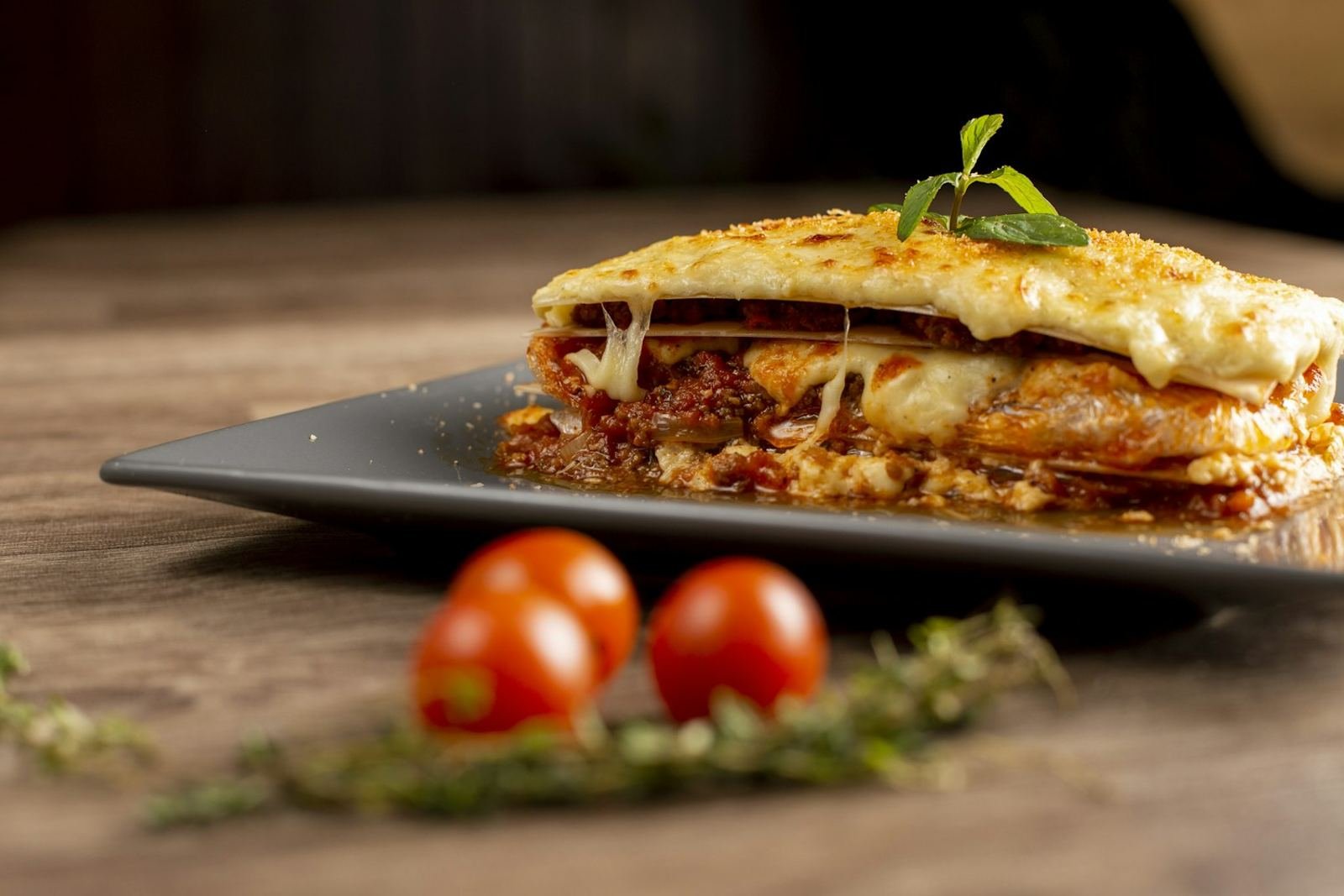
There are dishes you make because you are hungry, and dishes you make because people you love are coming to dinner. Classic beef lasagna belongs firmly in the second group. It takes an afternoon, it fills the house with the smell of simmering tomatoes and garlic, and it arrives at the table bubbling, golden and sliceable into generous squares. For many families it is the dish that marks birthdays, holidays and Sunday gatherings.
Our version keeps things traditional in the best sense: a meaty, slow-simmered tomato sauce built on ground beef, onion, garlic and a spoonful of tomato paste; a creamy ricotta layer seasoned with Parmesan, egg and parsley; ribbons of tender noodles; and a blanket of mozzarella. There is no bechamel and no secret ingredient, only careful technique and patience at each stage.
Lasagna also has the great virtue of being make-ahead friendly. You can assemble it a day in advance, freeze it for a month, and bake it straight from the refrigerator when guests arrive. In the sections below we walk through the decisions that separate a sloppy lasagna from a neat, flavorful one: how thick to make the sauce, how to keep the ricotta from turning watery, and why resting the finished pan matters so much.
Why this recipe works
A great lasagna has distinct layers that hold together when cut, with sauce that is rich rather than watery. Every step here serves that goal.
- A thick, well-reduced sauce. Simmering the meat sauce for at least 40 minutes cooks off excess water, concentrates the flavor and prevents a soupy lasagna.
- Tomato paste for depth. Cooking a couple of tablespoons of paste with the beef until it darkens adds a savory, almost roasted taste.
- A stabilized ricotta layer. An egg and Parmesan help the ricotta set into a creamy layer that holds its shape instead of leaking.
- A covered then uncovered bake. Foil keeps the pasta tender and the top from browning too soon, then removing it lets the cheese blister and brown.
- A proper rest. Twenty minutes out of the oven lets the layers firm up so slices hold together on the plate.
Ingredient notes
Ground beef. Use 80 percent lean ground beef for flavor and moisture; drain excess fat after browning. A mix of beef and Italian sausage makes a richer sauce if you like.
Tomatoes. A 28-ounce (794 g) can of crushed tomatoes gives a smooth sauce with body. San Marzano-style tomatoes are sweeter and less acidic. If your sauce tastes sharp, a pinch of sugar or a small grated carrot cooked with the onion will balance it.
Ricotta. Whole-milk ricotta gives the creamiest texture. If it looks watery in the container, drain it in a fine-mesh sieve for 15 minutes before mixing.
Mozzarella. Buy low-moisture mozzarella and shred it yourself from a block. Fresh mozzarella releases too much water, and pre-shredded bags contain anti-caking starch that keeps the cheese from melting smoothly.
Noodles. Standard lasagna noodles cooked until just shy of tender work best. No-boil noodles are a convenient alternative; use an extra ½ cup of water in the sauce so they can absorb it while baking.
Assembly: building clean layers
Start with a thin film of sauce across the bottom of the pan so the first noodles do not stick. Lay down three noodles, slightly overlapping, then spread a third of the ricotta, a third of the meat sauce and a quarter of the mozzarella. Repeat twice, finishing with a final layer of noodles, sauce and the remaining mozzarella and Parmesan. Keeping the noodle edges covered with sauce prevents them from drying and curling as they bake.
Place the baking dish on a rimmed baking sheet to catch any bubbling over. Cover tightly with foil that has been lightly sprayed with oil, so the cheese does not stick to it. Bake covered until hot and bubbling, then uncover to brown the top.
Tips & variations
- Make ahead. Assemble the lasagna up to 24 hours ahead and refrigerate it, covered. Add 10 to 15 minutes to the covered baking time.
- Add vegetables. Fold a box of thawed, squeezed-dry frozen spinach into the ricotta for extra color and nutrients.
- Vegetarian version. Replace the beef with sliced roasted mushrooms and zucchini, and cook the sauce for the same amount of time.
- Add wine. A half cup of dry red wine simmered into the sauce adds complexity.
- Brown the top. If the cheese is not as golden as you like at the end, broil for 1 to 2 minutes, watching carefully.
Timing your lasagna day
Because lasagna has several components, it helps to organize the work. Begin with the sauce, since it simmers the longest and needs little attention. While it bubbles, cook the noodles, mix the ricotta filling and shred the cheese. Once everything is ready, assembly takes about ten minutes. Plan on about 40 minutes of hands-on time spread across roughly two hours, plus the rest at the end.
If you want to serve dinner at six in the evening, start the sauce at three, put the lasagna in the oven at four, and let it rest while you set the table and make a salad. You can spread the work across two days by making the sauce the day before; it actually tastes better after a night in the refrigerator, and cold sauce is easier to layer neatly. Serve the lasagna with a bright green salad and garlic bread, and keep any extra sauce warm on the side for people who like their portions generously sauced.
Storage, freezing & reheating
Cool leftovers within two hours and refrigerate in an airtight container for up to four days. To freeze, cut the cooled lasagna into portions, wrap each in plastic and foil, and freeze for up to three months. You can also freeze an unbaked assembled lasagna in a foil pan; thaw it in the refrigerator for 24 hours before baking.
Reheat individual portions in the microwave for 2 to 3 minutes, or warm a larger pan covered with foil in a 350°F (175°C) oven for 25 to 30 minutes, until the center reaches 165°F (74°C).
Classic Beef Lasagna
Classic beef lasagna with a slow-simmered meat sauce, herbed ricotta filling and plenty of melted mozzarella. Includes make-ahead and freezing instructions.
- Prep
- 40 mins
- Cook
- 1 hr 30 mins
- Total
- 2 hrs 10 mins (plus 20 min rest)
- Yield
- 10 servings (one 9x13-inch pan)
Ingredients
Meat sauce
- 1 tbsp olive oil
- 1 large yellow onion, finely chopped
- 4 cloves garlic, minced
- 1½ lb (680 g) ground beef (80% lean)
- 2 tbsp tomato paste
- ½ cup (120 ml) dry red wine (optional)
- One 28-oz (794 g) can crushed tomatoes
- 1 cup (240 ml) water or beef broth
- 2 tsp dried oregano
- 1 tsp dried basil
- 1 tsp kosher salt, plus more to taste
- ½ tsp black pepper
- Pinch of sugar (optional)
Ricotta filling
- 15 oz (425 g) whole-milk ricotta
- 1 large egg
- ½ cup (50 g) grated Parmesan
- 2 tbsp chopped fresh parsley
- ½ tsp kosher salt
Assembly
- 12 lasagna noodles (about 12 oz / 340 g)
- 16 oz (450 g) low-moisture mozzarella, shredded
- ¼ cup (25 g) grated Parmesan, for the top
Instructions
- Brown the beef. Heat the oil in a large Dutch oven over medium-high heat. Add the onion and cook for 5 minutes until soft. Add the garlic and cook 30 seconds. Add the beef, breaking it up, and cook until browned, about 8 minutes. Drain excess fat.
- Build the sauce. Stir in the tomato paste and cook 2 minutes until it darkens. Add the wine, if using, and cook until nearly evaporated. Add the tomatoes, water, oregano, basil, salt, pepper and sugar.
- Simmer. Bring to a simmer, reduce the heat to low, and cook partially covered for 40 minutes, stirring occasionally, until thick. Taste and adjust the seasoning.
- Cook the noodles. Meanwhile, boil the noodles in salted water until just shy of al dente, about 2 minutes less than the package directions. Drain, rinse with cool water, and lay flat on oiled parchment.
- Mix the filling. Heat the oven to 375°F (190°C). In a bowl, stir together the ricotta, egg, ½ cup Parmesan, parsley and salt.
- Assemble. Spread 1 cup of sauce in a 9 x 13-inch (23 x 33 cm) baking dish. Layer 3 noodles, a third of the ricotta, a third of the remaining sauce and a quarter of the mozzarella. Repeat twice. Top with the last noodles, sauce, mozzarella and ¼ cup Parmesan.
- Bake covered. Set the dish on a rimmed baking sheet. Cover with oiled foil and bake for 25 minutes.
- Bake uncovered and rest. Remove the foil and bake 20 to 25 minutes more until bubbling and golden. Rest for 20 minutes before cutting.
Notes
Lasagna can be assembled up to a day ahead and refrigerated; add 10 to 15 minutes of baking time. The internal temperature should reach 165°F (74°C) when reheating. Rest before slicing for clean layers.
Nutrition (approximate, per serving)
Calories: 560 kcal · Carbohydrates: 34 g · Protein: 37 g · Fat: 31 g (saturated 15 g) · Sodium: 870 mg · Fiber: 3 g · Sugar: 7 g
Nutrition values are estimates calculated from typical ingredients and will vary by brand and portion. See our disclaimer.
Frequently asked questions
Why is my lasagna watery?
Usually the sauce was not reduced enough, the ricotta was wet, or the lasagna was cut too soon. Simmer the sauce until thick, drain watery ricotta, and let the pan rest for 20 minutes before slicing.
Do I need to boil the noodles?
With regular noodles, yes. No-boil noodles skip this step but need a slightly thinner sauce so they can absorb moisture while baking.
Can I freeze lasagna?
Yes, baked or unbaked. Wrap tightly and freeze for up to three months. Thaw in the refrigerator before baking or reheating.
How do I cut neat squares?
Let it rest for 20 minutes, use a sharp knife or a thin metal spatula, and wipe the blade between cuts.
Enjoyed this one? You may also like Creamy Tuscan Garlic Pasta, Fluffy Buttermilk Pancakes.